

Jean-Marc Zeil
CEO & co-founder
CEO of pharma and food industries for +20y.
Business development
Strong growth of the various companies managed

Orinova develops innovative drug candidates using exclusive nanotechnology to target tumors with unprecedented precision, without harming healthy tissue.
Based in Besançon, ORINOVA is a biotechnology company focused on developing first-in-class product candidates that use proprietary nanotechnology to transform cancer treatment.
ORINOVA develops disruptive nanotherapeutics with the potential to tackle the solid tumors from different angles and designed for many localized cancers.
ORINOVA is developing nanotherapeutics to patients with hard-to-treat localized cancers such as glioblastoma (GBM).
ORINOVA is also to improve survival in cancer by reducing treatment toxicities to patients with solid tumors such as rectal cancers.

At ORINOVA, we are translating years of basic academic research in the field of nanomedicines into novel therapeutic approaches to treat cancers.
We specialize in the development of first-in-class nanomedicines combining chemotherapy and radiotherapy from local delivery to global impact on the tumor.
Key value-creating milestones
Sep. 2024
Founding of ORINOVA
Jan. 2025
First capital increase
2025
Two highly conclusive in vivo proof-of-concept (POC) studies on glioblastoma, including one comparing the treatment to the STUPP protocol, the standard of care
Oct. 2025
i-Lab Grand Prix 2025: a highly selective innovation competition organized by France 2030 and the BPI
Mar. 2026
Selection of anorectal cancer as the lead indication for our first nanomedicine currently in development: ORI-101
CEO & co-founder
CEO of pharma and food industries for +20y.
Business development
Strong growth of the various companies managed

CSO & co-founder
Immunotherapies Expert in Oncology for +25y. - Drug discovery - Translational R&D
4 Licenses to Pharma
+50 publications / +25 patents

DMO
Nanomedicine development expert
+8 years in clinical-stage
GMP nanodrug batch release
+45 publications / 1 patent

Dr Frédéric Dhermain
Radiotherapist IGR

Dr Bertrand Mathon
Neurosurgeon - La Pitié Salpêtrière

Dr Mehdi Touat
Neuro-oncologist - La pitié Salpêtrière

Prof Gilles Truc
Radiotherapist - CGFL

Prof Michel Ducreux
PUPH, Head of the Digestive Oncology Department – Gustave Roussy Institute

Prof Thomas Aparicio
PUPH, Oncologie Digestive - Saint-Louis Hospital

Chemotherapy or radiotherapy a cornerstone of cancer treatment, but are reaching their limits. We cannot increase efficacy without increasing toxicity, this is the core limitation
The arrival of nanobiotechnologies in oncology brings a new breath of hope to cancer treatment. ORINOVA’s proprietary platform is suitable for intratumoral delivery that transforms radio-chemotherapy into a high-efficacy, low-toxicity treatment.
Multifonctional nanomedicine is gaining momentum to tackle by different modes of action at the same time in the heart of the tumor. Our approach allows approved cancer treatments to work more efficiently and further improve outcomes for patients.

Development of First-in-Class Nanotherapeutics

Increasing the radiation dose delivery to the tumour without increasing the dose to healthy tissue

Codelivery of chemotherapy and radioenhancer in the same time in the heart of the tumour

With the potential to transcend the limitations of biology-specific treatments

Swiftly adapted and scaled to benefit a diverse range of patients

Available for different cancer types
Chemoradiotherapy is already integrated into current treatment
The tumor is accessible for intra-tumoral injection
Current GBM treatments offer poor survival benefit, with high rates of recurrence.
With efficacious modality but with some limitations
Patient’s quality of life is impacted by symptoms, progression and treatment side effects
Colorectal cancer is the third leading cause of cancer death worldwide.
Rectal cancer accounts for 30% of all colorectal cancers.
An emerging need: preventing radiation toxicity.
Adverse effects of radiotherapy include intestinal and rectal inflammation.
Later toxicity, such as neurotoxicity, can also occur in patients receiving combined chemotherapy.
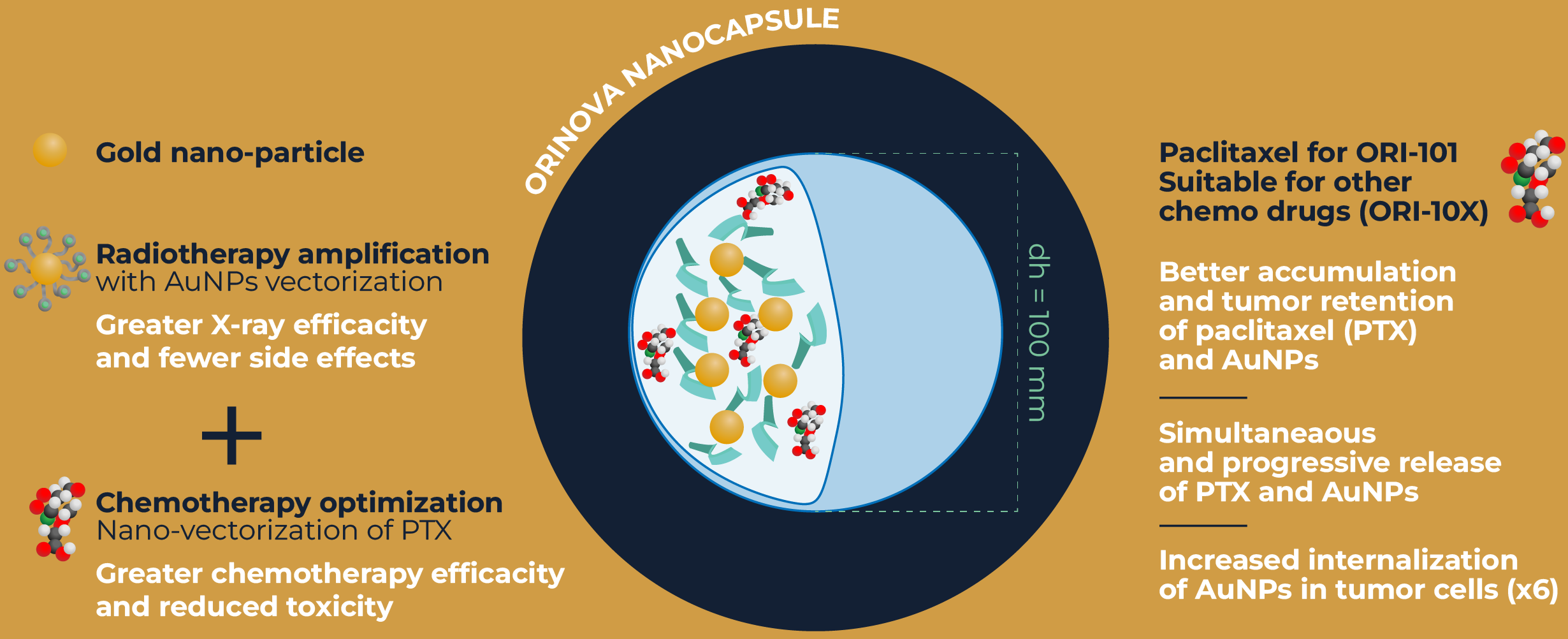
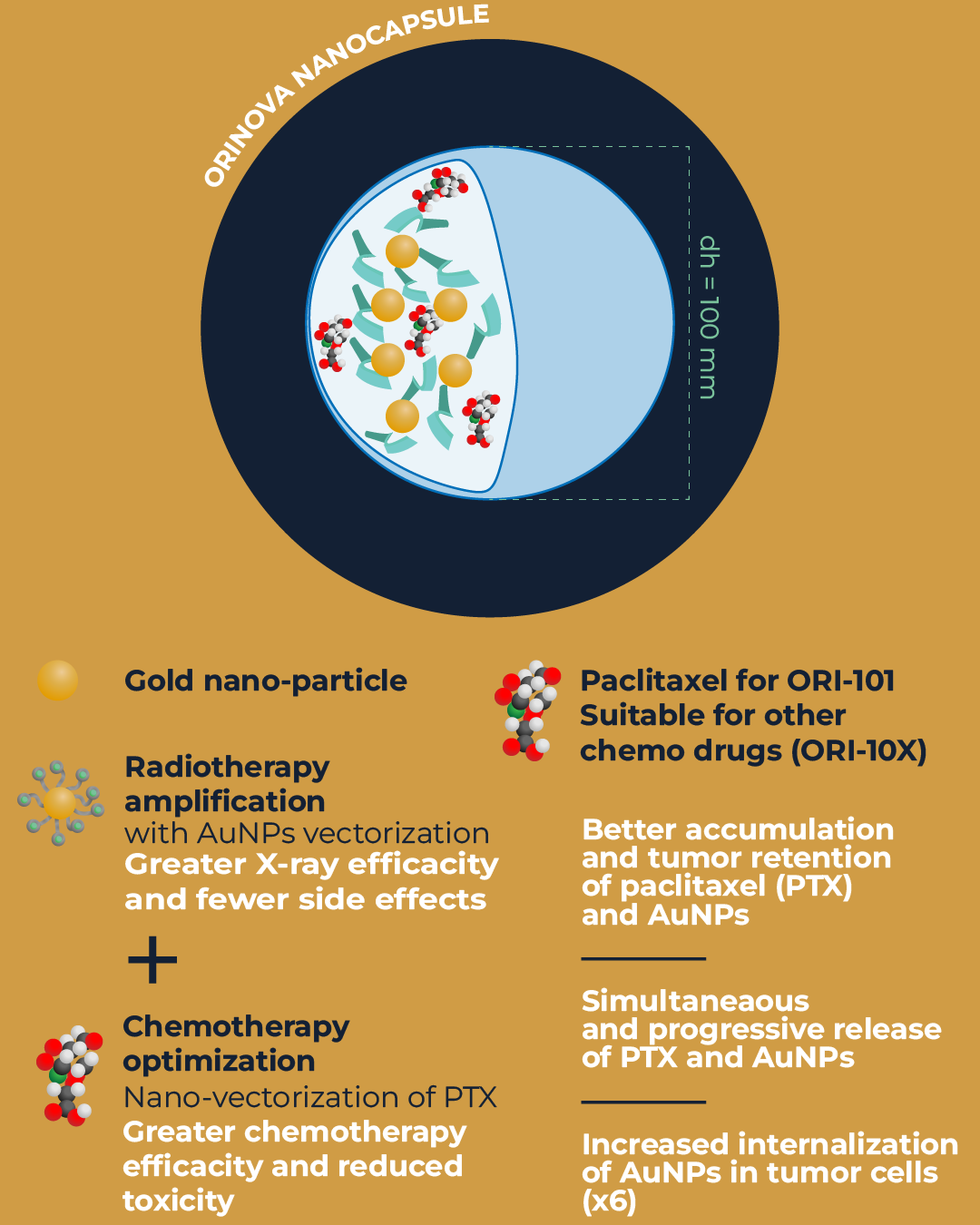
A high number of Gold (Au) atoms used as radiotherapy enhancer.
Some chelated gadolinium (Gd) atoms, enabling contrast during IRM
Paclitaxel with binds to tubulin, stabilize the microtubule structure, which prevents cell division and ultimately leading to cancer cell death
To improve PTX pharmaceuticals’ solubility
To bypass BB penetration following intra tumoral administration
To improve tumor accumulation and reduce off-target toxicity
New generation of nanomedicines to patients with hard-to-treat brain tumors such as glioblastoma (GBM).
Delivery in the heart of the tumor
With broad application for solid tumors such as renal cancers,…
Maximizing the dose in the tumor, minimizing the systemic exposure
Local multimodality nanomedicine through
Paclitaxel triggered tumor cell death
Increasing the radiation dose delivery to the tumour without increasing the dose to healthy cells
Tumor microenvironment modulation
Designed to disrupt outcomes without disrupting clinical practice
Currently in the final stages of non-regulatory preclinical development with process with FIH in 2029
Our technology aligns perfectly with the UN’s SDG 3 on sustainable development: “Ensure healthy lives and promote well-being for all at all ages.”
Indeed, ORINOVA technology optimizes the treatment of GBM and localized solid tumors in general, notably allowing for reduced doses of radiation therapy and chemotherapy while ensuring that all active agents are delivered to the target area.
These advantages help reduce the energy footprint of medical infrastructure related to radiation production and administration (electricity consumption, equipment runtime) and limit the production of chemotherapy drugs and chemicals in general. Furthermore, we contribute to a more efficient use of medical resources by reducing losses and waste associated with ineffective treatments.
Thus, ORINOVA has a positive impact on the environment by reducing the use of terrestrial resources compared to current treatments, limiting industrial emissions and discharges and thereby reducing pollution, and finally, indirectly mitigating climate change.
ORINOVA aims to provide an innovative new treatment for glioblastoma and other types of solid tumors, such as rectal cancer, thereby extending patients’ lives and improving their comfort during treatment, particularly by reducing side effects.
ORINOVA addresses an unmet medical need: the treatment of glioblastoma. Glioblastoma, an orphan disease, is a highly aggressive and invasive solid tumor located in the brain.
Expectations are high; the standard of care has not evolved in some twenty years, and despite significant research funding, no Phase 3 clinical trial to date has identified a promising candidate.
Tens of thousands of patients with glioblastoma could then see their life expectancy increase with greater comfort (fewer side effects), and eventually millions of people once our treatment is applied to other cancers.
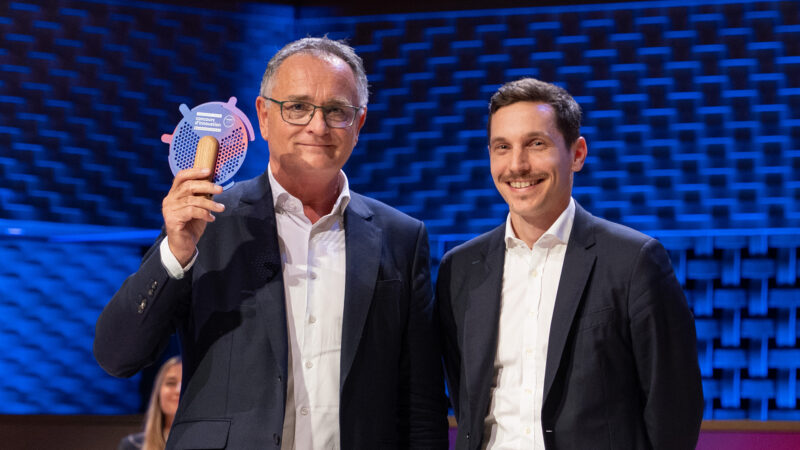
i-Lab Grand Prix 2025 is a highly selective innovation competition organized by France 2030 and the BPI… And Orinova won !
Read more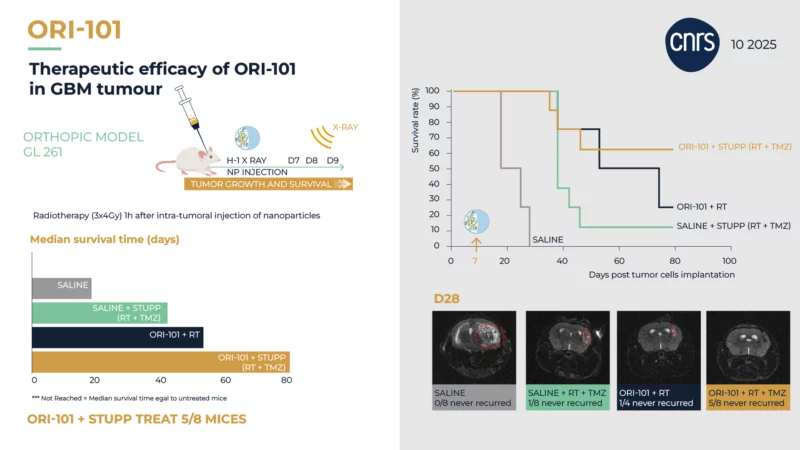
Two highly conclusive in vivo proof-of-concept (POC) studies on glioblastoma, including one comparing the treatment to the STUPP protocol, the standard of care.
Read moreTo contact us, please send us an email.
Address
Temis Innovation Technopole18 rue Alain Savary, 25000 Besançon